
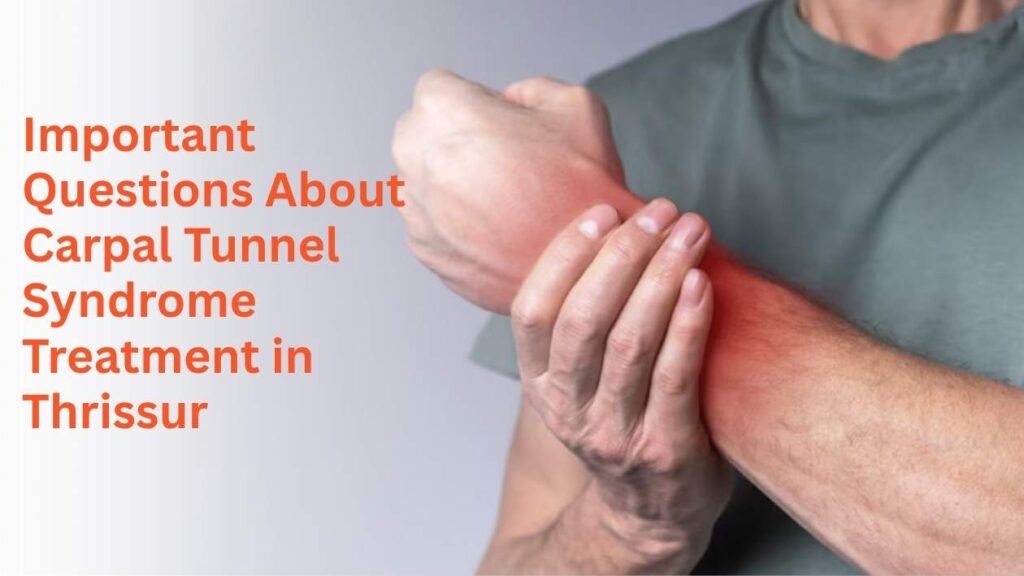
Important Questions About Carpal Tunnel Syndrome Treatment in Thrissur
Important Questions About Carpal Tunnel Syndrome Treatment in Thrissur help individuals better understand the condition, available treatment options, expected outcomes, and overall care process. Carpal Tunnel Syndrome occurs due to compression of the median nerve in the wrist, leading to symptoms such as numbness, tingling, pain, and weakness in the hand. Asking the right questions before starting treatment ensures clarity, informed decision-making, and better preparation for recovery.
1. What is Carpal Tunnel Syndrome and how is it treated?
Understanding the condition is the first step. Carpal Tunnel Syndrome is caused by pressure on the median nerve, and treatment may include non-surgical methods such as splinting and physiotherapy, or surgical intervention in more advanced cases.
2. What symptoms indicate the need for treatment?
Common symptoms include numbness, tingling, wrist pain, and weakness in the hand. Persistent or worsening symptoms may require medical evaluation and treatment.
3. What are the available treatment options?
Treatment options may include:
- Wrist splints
- Medications
- Physiotherapy
- Lifestyle modifications
- Surgical procedures
The choice depends on the severity of the condition.
4. When is surgery recommended?
Surgery is usually considered when symptoms are severe, persistent, or do not improve with non-surgical treatment.
5. What is the success rate of treatment?
Most individuals experience significant relief from symptoms with appropriate treatment. Outcomes depend on early diagnosis and adherence to care.
6. What are the risks involved in treatment?
Possible risks include minor side effects from medications or complications related to surgery such as infection or nerve irritation.
7. How long does recovery take?
Recovery time varies based on treatment type and severity. Non-surgical recovery may take weeks, while surgical recovery may take several weeks to months.
8. Will I need physiotherapy after treatment?
Physiotherapy is often recommended to improve strength, flexibility, and hand function during recovery.
9. Can Carpal Tunnel Syndrome return after treatment?
Recurrence is possible, especially if underlying causes such as repetitive strain are not addressed.
10. How can I prevent Carpal Tunnel Syndrome?
Preventive measures include maintaining proper wrist posture, taking regular breaks, using ergonomic tools, and performing hand exercises.
11. What should I expect during consultation?
Consultation typically includes symptom evaluation, physical examination, and possibly diagnostic tests to confirm the condition.
12. Are diagnostic tests necessary?
Tests like nerve conduction studies or EMG may be required to assess nerve function and confirm the diagnosis.
13. What lifestyle changes are recommended?
Lifestyle modifications such as reducing repetitive strain, improving posture, and managing health conditions can support treatment and recovery.
14. How do I prepare for treatment?
Preparation may involve medical evaluation, following instructions, arranging time for recovery, and making necessary lifestyle adjustments.
15. Will treatment affect daily activities?
There may be temporary limitations, but most individuals gradually return to normal activities after recovery.
16. What follow-up care is required?
Regular follow-up visits help monitor recovery and ensure proper healing.
17. How do I choose the right treatment approach?
The treatment approach depends on severity, symptoms, and individual health factors. A proper evaluation helps determine the most suitable option.
Final Overview
Important Questions About Carpal Tunnel Syndrome Treatment in Thrissur provide a clear understanding of the condition, treatment process, and expected outcomes. Asking these questions helps individuals make informed decisions and prepare for treatment effectively.
With proper guidance, early intervention, and adherence to recommended care, individuals can achieve symptom relief, improved hand function, and better quality of life while minimizing the risk of complications.
Frequently Asked Questions
1. What is Carpal Tunnel Syndrome?
Carpal Tunnel Syndrome is a condition caused by pressure on the median nerve in the wrist, leading to pain, numbness, and tingling.
2. What are the main treatment options available?
Treatment options include splints, medications, physiotherapy, lifestyle changes, and surgery in severe cases.
3. When should I consider treatment?
Treatment should be considered when symptoms persist, worsen, or interfere with daily activities.
4. Is surgery always required for Carpal Tunnel Syndrome?
No, surgery is only recommended if non-surgical treatments are not effective or symptoms are severe.
5. How long does recovery take after treatment?
Recovery time varies, but many individuals improve within weeks, with full recovery taking several weeks to months.
6. Are there any risks involved in treatment?
There may be minor risks such as medication side effects or surgical complications, but treatments are generally safe.
7. Can symptoms return after treatment?
Yes, recurrence is possible if underlying causes like repetitive strain are not managed.
8. Do I need physiotherapy after treatment?
Physiotherapy is often recommended to improve strength and restore hand function.
9. What lifestyle changes help in recovery?
Maintaining proper posture, reducing repetitive strain, and using ergonomic tools can support recovery.
10. Why is early treatment important?
Early treatment helps prevent nerve damage, improves outcomes, and reduces the risk of complications.

Dr Vinu Roy
Plastic and Cosmetic SurgeonDr Vinu Roy is a plastic and cosmetic surgeon with expertise in cosmetic surgery, reconstructive surgery, microvascular surgery, hand surgery, trauma reconstruction, and brachial plexus procedures.
He focuses on enhancing both form and function with personalized surgical care, helping patients achieve their aesthetic and reconstructive goals with confidence.
Sushrutha Institute of Plastic, Reconstructive, and Aesthetic Surgery, Elite Mission Hospital, Koorkenchery, Thrissur

