
Expert Reconstructive Surgery After Accidents: What You Need to Know
Recovering from a serious accident involves far more than rest and medication. When injuries affect bones, nerves, muscles, or soft tissues, expert reconstructive surgery after accidents becomes an essential step toward restoring both function and quality of life.
This guide explains the key signs, procedures, and recovery strategies involved in post-accident reconstructive surgery and why early intervention matters.
Why Expert Reconstructive Surgery After Accidents Is Different From Routine Care?
General medical care addresses immediate trauma fractures are stabilised, wounds are closed, and vitals are monitored. But many accident survivors are left with lasting damage that routine care cannot resolve:
- Nerve injuries that cause persistent numbness or weakness
- Soft tissue defects that affect appearance and movement
- Deep wounds that fail to heal or develop complications
- Limb injuries requiring microvascular repair to restore blood supply
- Scarring that limits range of motion
Expert reconstructive surgery after accidents addresses these complex, layered injuries using specialised techniques like microsurgery, tissue transfer, and nerve repair procedures that go well beyond standard orthopaedic or emergency surgery.
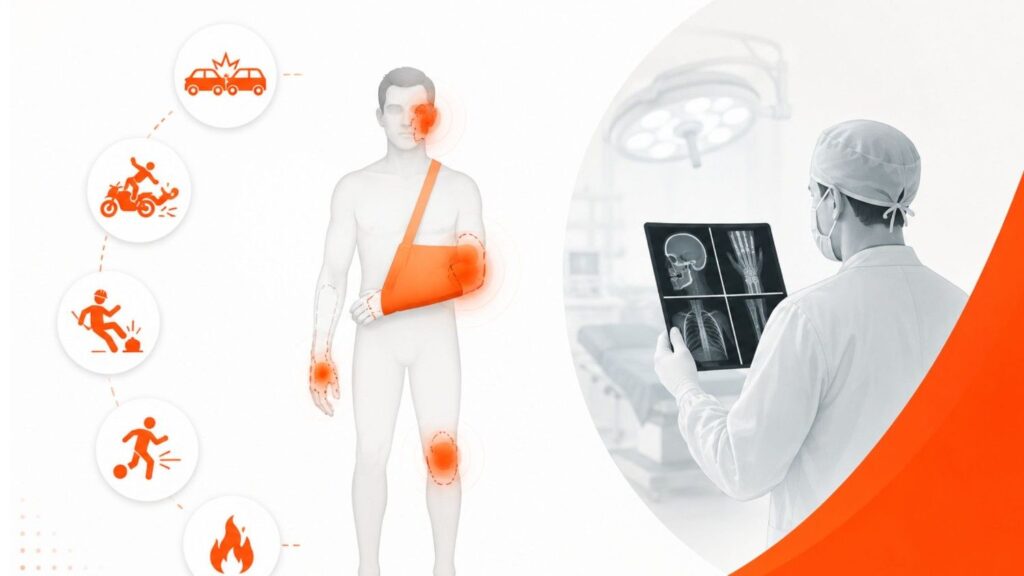
Reconstructive surgery is frequently required following:
Road Traffic Accidents High-impact collisions often cause crush injuries, degloving wounds, and complex fractures that damage multiple tissue layers simultaneously.
Industrial and Workplace Injuries Machinery-related injuries, chemical burns, and crush trauma frequently require soft tissue reconstruction and scar management.
Sports Injuries Severe ligament, tendon, or nerve damage from sports accidents may need reconstructive repair to restore athletic function.
Burns and Severe Wounds Thermal and chemical burns cause extensive tissue damage requiring skin grafting and wound reconstruction procedures.
Falls and High-Energy Fractures Falls from height often result in bone loss, nerve compression, and soft tissue damage that require staged reconstructive procedures.
leo.
7 Signs You May Need Expert Reconstructive Surgery After Accidents
1. Persistent Numbness or Tingling This may indicate nerve damage that requires surgical nerve repair for gradual recovery of sensation and movement.
2. Non-Healing Wounds If a wound shows no significant improvement after several weeks, reconstructive procedures such as skin grafting or flap surgery may be needed.
3. Visible Tissue Loss or Bone Exposure These are medical emergencies requiring urgent microvascular reconstruction and soft tissue coverage.
4. Loss of Limb Movement Tendon or nerve injuries that prevent normal joint movement often benefit significantly from reconstructive repair.
5. Severe or Worsening Scarring Contracture scars that restrict movement or cause deformity require surgical scar management and release procedures.
6. Chronic Pain After Initial Healing Unresolved deep tissue damage or nerve entrapment may be the underlying cause, requiring further surgical evaluation.
7. Aesthetic Deformity Affecting Daily Life Reconstruction is not solely cosmetic appearance-related injuries also affect emotional wellbeing, confidence, and social functioning.
Key Procedures in Expert Reconstructive Surgery After Accidents
- Soft Tissue Reconstruction Repairs damaged skin, subcutaneous tissue, and muscle using local flaps, free flaps, or tissue expansion techniques. Restores both protective cover and normal contour.
- Microvascular Surgery A highly specialised procedure performed under microscopic magnification to reconnect blood vessels and nerves. Microvascular techniques enable the transfer of healthy tissue from one part of the body to repair complex defects elsewhere.
- Nerve Repair and Reconstruction Restores sensory and motor function after peripheral nerve injuries. Outcomes improve significantly when nerve repair is performed early by an experienced surgeon.
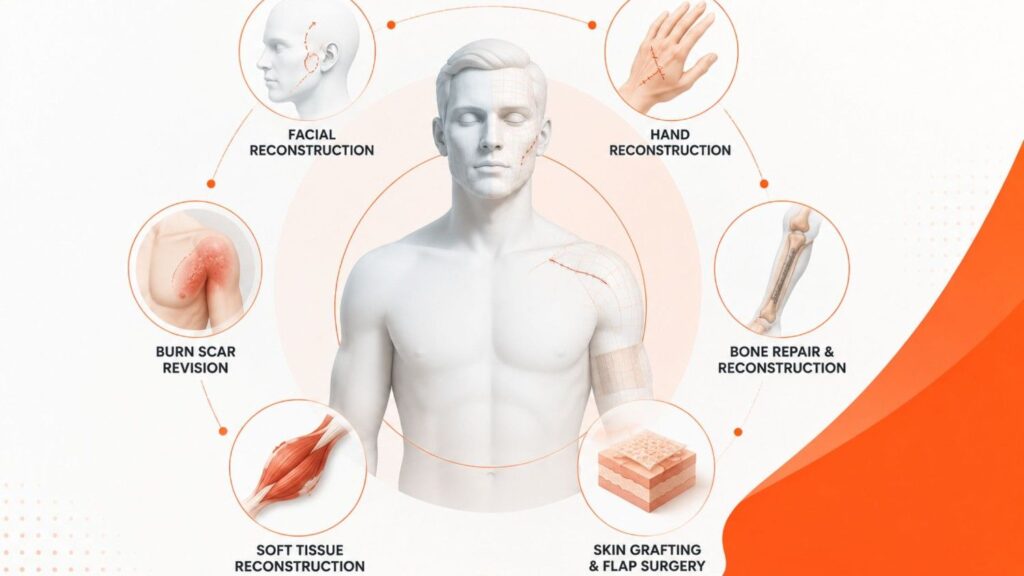
- Bone Stabilisation and Reconstruction Addresses fractures and bone loss using fixation devices, bone grafts, or distraction osteogenesis to restore structural support.
- Skin Grafting Used for large wound coverage after burns or degloving injuries. Split-thickness and full-thickness grafts are selected based on wound depth and location.
- Tendon and Muscle Repair Restores movement and strength after tendon rupture or muscle avulsion injuries, often in combination with physiotherapy for optimal outcomes.
The Role of Nutrition in Recovery After Reconstructive Surgery
Good nutrition is one of the most underestimated factors in surgical recovery. After expert reconstructive surgery following accidents, the body requires significantly higher levels of specific nutrients to rebuild tissue, prevent infection, and reduce inflammation.
Protein is the primary building block for tissue repair. Patients recovering from trauma reconstruction should prioritise high-quality protein sources such as eggs, legumes, lean poultry, and paneer
Vitamin C – Essential for collagen synthesis -the structural protein that holds repaired tissue together. Sources include citrus fruits, guava, amla, and bell peppers.
Zinc Supports immune function and wound healing. Found in pumpkin seeds, nuts, whole grains, and legumes.
Omega-3 Fatty Acids Reduce post-surgical inflammation and support nerve repair. Found in flaxseeds, walnuts, and fatty fish.
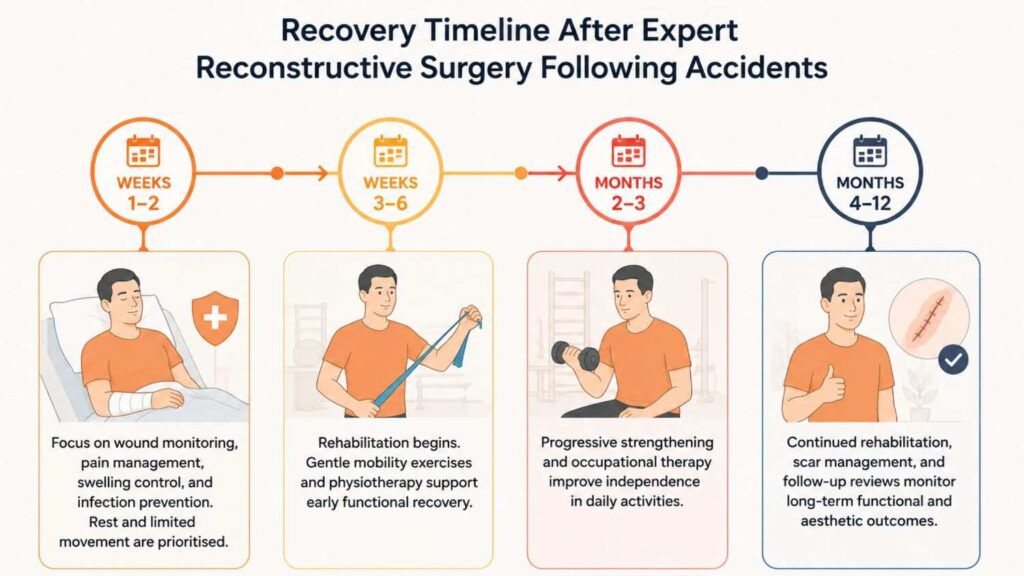
Recovery Timeline After Expert Reconstructive Surgery Following Accidents
Recovery is a gradual, staged process that varies with injury severity and procedure type.
Emotional and Psychological Recovery
Traumatic injuries affect far more than the body. Many accident survivors experience anxiety, depression, or post-traumatic stress, particularly when injuries alter appearance or mobility. Expert reconstructive surgery after accidents addresses the physical dimension, but comprehensive recovery also requires psychological support, counselling, and peer connection.
Conclusion
Recovering from a serious accident is never easy, but expert reconstructive surgery after accidents offers a proven and advanced pathway to restore what trauma has taken away function, mobility, sensation, and confidence. Whether the injury involves damaged nerves, lost soft tissue, fractured bones, or complex wounds, modern reconstructive techniques like microvascular surgery, tissue transfer, and nerve repair have transformed what is possible for accident survivors. Early intervention, the right surgical expertise, and a committed rehabilitation plan are the three pillars that determine how fully a patient recovers. If you or a loved one is dealing with the lasting effects of a traumatic injury, seeking expert reconstructive care at the right time can make the difference between permanent disability and meaningful, long-term recovery.
Learn more about reconstructive surgery standards and outcomes : American Society Of Plastic Surgeons.
FREQUENTLY ASKED QUESTIONS
1. What is expert reconstructive surgery after accidents?
It is a specialised surgical discipline that repairs complex tissue damage including nerves, blood vessels, bones, and soft tissues after severe accident injuries, using advanced techniques like microsurgery and tissue transfer.
2. How soon after an accident should reconstruction be performed?
Where possible, early surgical intervention within days to weeks improves outcomes by preserving tissue viability, reducing infection risk, and preventing permanent disability.
3. Is reconstructive surgery only for appearance?
No. While reconstruction improves appearance, the primary goals are restoring function, mobility, sensation, and quality of life.
4. Does reconstruction surgery leave scars?
All surgeries involve some scarring, but reconstructive techniques are designed to minimise and manage scars while restoring the underlying structure and function.
5. How long does recovery take after expert reconstructive surgery?
Recovery varies by procedure. Soft tissue repairs may stabilise within weeks, while nerve repairs and microvascular flaps may require 6–24 months for full functional recovery.
6. Is physiotherapy necessary after reconstruction?
Yes. Rehabilitation is a core component of recovery. Physiotherapy restores range of motion, strength, and functional independence after trauma reconstruction.
7. Can nerve damage from accidents be repaired surgically?
Yes. Peripheral nerve injuries can often be repaired or reconstructed surgically, with gradual improvement in sensation and movement over months.
8. What is microvascular surgery?
It involves reconnecting small blood vessels and nerves under a surgical microscope. It is essential for limb salvage, free flap reconstruction, and complex wound repair.
9. Are there risks with reconstructive surgery after accidents?
As with any surgery, risks include infection, delayed healing, and flap or graft-related complications. These are minimised with careful surgical planning and postoperative monitoring.
10. Where can I consult for expert reconstructive surgery after accidents in Thrissur?
Dr Vinu Roy at Sushrutha Institute of Plastic, Reconstructive, and Aesthetic Surgery, Elite Mission Hospital, Koorkenchery, Thrissur offers expert trauma reconstruction consultations.
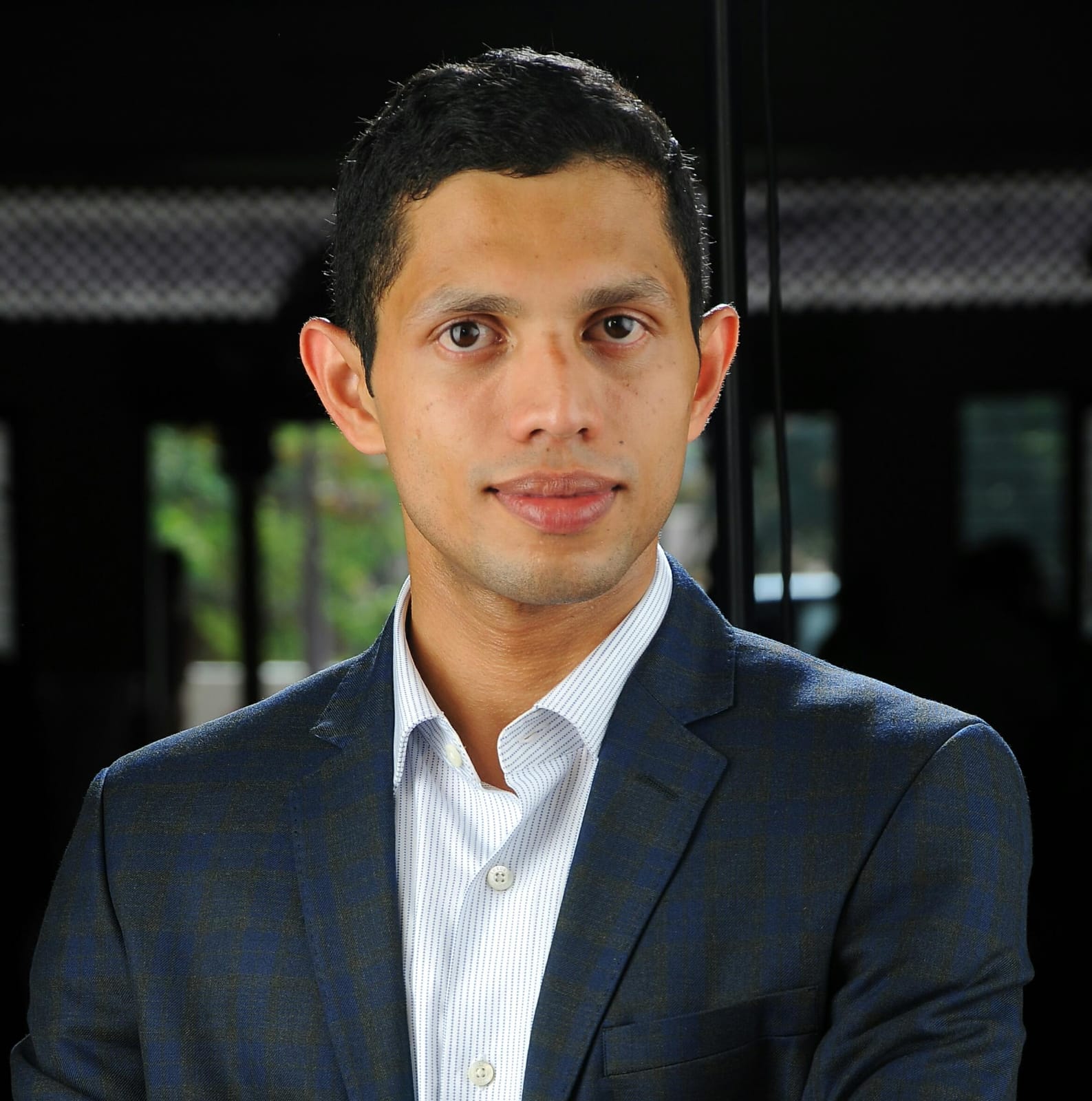
Dr Vinu Roy
Plastic and Cosmetic SurgeonDr Vinu Roy is a plastic and cosmetic surgeon with expertise in cosmetic surgery, reconstructive surgery, microvascular surgery, hand surgery, trauma reconstruction, and brachial plexus procedures.
He focuses on enhancing both form and function with personalized surgical care, helping patients achieve their aesthetic and reconstructive goals with confidence.
Sushrutha Institute of Plastic, Reconstructive, and Aesthetic Surgery, Elite Mission Hospital, Koorkenchery, Thrissur

