
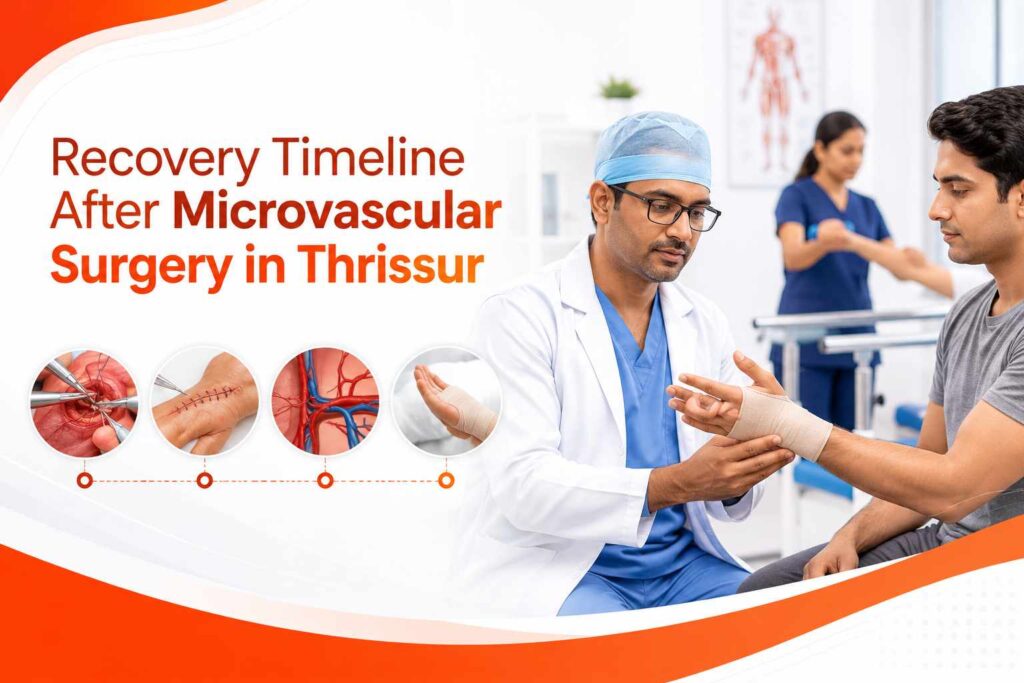
Recovery Timeline After Microvascular Surgery in Thrissur is an important topic for patients undergoing reconstructive or trauma-related microsurgical procedures. Microvascular surgery is a highly advanced surgical technique used to repair tiny blood vessels, nerves, and tissues under magnification. Since these procedures are delicate and complex, recovery requires careful monitoring, rehabilitation, and patience.
Understanding the Recovery Timeline After Microvascular Surgery in Thrissur helps patients prepare physically and emotionally for the healing journey. Recovery may vary depending on the severity of the injury, the type of reconstruction performed, overall health condition, and postoperative care. Proper rehabilitation and early medical attention can significantly improve functional outcomes and tissue healing.
This blog explains the different stages of healing, expected recovery duration, rehabilitation process, possible complications, and factors affecting recovery after microvascular surgery.
Understanding Microvascular Surgery Recovery
Microvascular surgery recovery involves gradual healing of tissues, restoration of blood circulation, and improvement of nerve and muscle function. Since the procedure involves reconnecting tiny blood vessels and nerves, recovery must be closely monitored during the early stages.
The Recovery Timeline After Microvascular Surgery in Thrissur generally includes immediate postoperative monitoring, wound healing, rehabilitation therapy, and long-term functional improvement. Every stage is important for achieving successful outcomes.
Immediate Recovery After Surgery
The first few days after surgery are considered the most critical phase in the Recovery Timeline After Microvascular Surgery in Thrissur.
During this period, patients are closely monitored for:
- Blood circulation in reconstructed tissue
- Tissue color and temperature
- Swelling and bleeding
- Oxygen supply to tissues
- Signs of clot formation
Doctors and nursing teams continuously evaluate tissue viability to ensure the success of the microsurgical connections.
Patients may stay in the hospital for several days depending on the complexity of the procedure.
First Week of Recovery
The first week is a sensitive period in the Recovery Timeline After Microvascular Surgery in Thrissur because blood vessels are still healing.
Common experiences during this stage include:
- Mild to moderate pain
- Swelling around the surgical site
- Limited mobility
- Fatigue
- Need for wound care
Pain medications, antibiotics, and limb positioning guidance are usually provided to support healing.
Patients are advised to avoid pressure or strain on the reconstructed area during this early stage.
Wound Healing Phase
Wound healing is an important part of the Recovery Timeline After Microvascular Surgery in Thrissur.
This stage generally occurs over several weeks and involves:
- Gradual reduction in swelling
- Skin healing
- Improved blood circulation
- Formation of healthy tissue
Doctors monitor the surgical site regularly to ensure proper healing and prevent infection.
Proper nutrition, hydration, and rest are essential during this phase.
Role of Blood Flow in Recovery
Restoration of blood circulation is one of the most important goals of microvascular surgery.
In the Recovery Timeline After Microvascular Surgery in Thrissur, healthy blood flow helps:
- Deliver oxygen to tissues
- Improve wound healing
- Reduce tissue damage
- Support nerve recovery
Poor circulation may increase the risk of complications, which is why careful postoperative monitoring is essential.
Nerve Healing and Sensory Recovery
Nerve healing takes longer compared to wound healing and is a gradual part of the Recovery Timeline After Microvascular Surgery in Thrissur.
Patients may experience:
- Tingling sensations
- Temporary numbness
- Increased sensitivity
- Slow return of sensation
Nerves regenerate slowly, and complete recovery may take several months depending on the severity of nerve damage.
Consistent rehabilitation often helps improve functional outcomes.
Rehabilitation and Physiotherapy
Physiotherapy plays a major role in the Recovery Timeline After Microvascular Surgery in Thrissur.
Rehabilitation programs may include:
- Range-of-motion exercises
- Strength training
- Hand therapy
- Mobility exercises
- Functional rehabilitation
These exercises help restore flexibility, coordination, and muscle strength.
Therapy plans are customized based on the type of surgery and patient condition.
Recovery After Free Flap Reconstruction
Free flap reconstruction is commonly performed in microvascular surgery.
The Recovery Timeline After Microvascular Surgery in Thrissur after flap procedures involves:
- Monitoring flap blood supply
- Preventing pressure on transferred tissue
- Gradual return to daily activities
- Rehabilitation for mobility and strength
Successful flap survival depends heavily on early postoperative monitoring and patient compliance.
Recovery After Limb Reattachment
Limb or finger reattachment procedures require extensive rehabilitation.
The Recovery Timeline After Microvascular Surgery in Thrissur for limb salvage procedures may involve:
- Long-term physiotherapy
- Sensory retraining
- Muscle strengthening
- Functional movement therapy
Recovery duration varies depending on the severity of injury and nerve involvement.
Patients often require continuous follow-up for optimal recovery.
Factors Affecting Recovery
Several factors influence the Recovery Timeline After Microvascular Surgery in Thrissur.
These include:
- Age of the patient
- Severity of tissue damage
- Smoking habits
- Diabetes or vascular disease
- Nutritional status
- Rehabilitation consistency
Healthy lifestyle choices can significantly improve healing outcomes.
Importance of Postoperative Monitoring
Postoperative monitoring is essential in the Recovery Timeline After Microvascular Surgery in Thrissur.
Doctors closely observe for:
- Blood vessel blockage
- Tissue discoloration
- Infection
- Reduced circulation
- Delayed healing
Early identification of complications improves the chances of successful intervention.
Pain Management During Recovery
Pain management is an important component of the Recovery Timeline After Microvascular Surgery in Thrissur.
Patients may receive:
- Pain relief medications
- Anti-inflammatory medicines
- Nerve pain management
- Physical therapy support
Managing pain properly allows patients to participate more effectively in rehabilitation exercises.
Emotional Recovery and Psychological Support
Recovery is not only physical but also emotional.
The Recovery Timeline After Microvascular Surgery in Thrissur may involve psychological adjustments, especially after trauma or major reconstructive procedures.
Patients may experience:
- Anxiety
- Fear of movement
- Emotional stress
- Reduced confidence
Support from healthcare professionals, family, and rehabilitation specialists can improve emotional well-being during recovery.
Returning to Daily Activities
The ability to return to normal activities depends on the complexity of surgery.
In the Recovery Timeline After Microvascular Surgery in Thrissur, patients are usually advised to resume activities gradually.
This may include:
- Light movements initially
- Avoiding heavy lifting
- Gradual return to work
- Controlled physical activity
Following medical guidance helps prevent complications during healing.
Long-Term Functional Recovery
Long-term improvement is an important stage in the Recovery Timeline After Microvascular Surgery in Thrissur.
Functional recovery may continue for months after surgery.
Goals include:
- Improved movement
- Better grip strength
- Enhanced mobility
- Restored coordination
- Improved independence
Recovery is often gradual but highly rewarding with consistent therapy.
Possible Complications During Recovery
Although outcomes are often successful, complications can occur during the Recovery Timeline After Microvascular Surgery in Thrissur.
Potential complications include:
- Infection
- Blood clot formation
- Tissue loss
- Delayed wound healing
- Nerve weakness
Regular follow-up appointments help detect and manage complications early.
Importance of Early Rehabilitation
Early rehabilitation can positively impact the Recovery Timeline After Microvascular Surgery in Thrissur.
Benefits include:
- Reduced stiffness
- Improved blood circulation
- Better joint mobility
- Faster functional recovery
Therapy programs are usually introduced carefully to avoid strain on healing tissues.
Nutritional Support During Recovery
Nutrition plays a significant role in the Recovery Timeline After Microvascular Surgery in Thrissur.
A healthy diet supports:
- Tissue repair
- Immune function
- Wound healing
- Energy restoration
Patients are often encouraged to maintain balanced nutrition and proper hydration throughout recovery.
Advances Improving Recovery Outcomes
Modern microsurgical advancements have improved the Recovery Timeline After Microvascular Surgery in Thrissur.
Innovations include:
- Advanced surgical microscopes
- Improved vascular imaging
- Better postoperative monitoring systems
- Precision microsurgical instruments
These developments contribute to improved tissue survival and functional outcomes.
Importance of Follow-Up Visits
Follow-up visits are essential throughout the Recovery Timeline After Microvascular Surgery in Thrissur.
These appointments help evaluate:
- Tissue healing
- Nerve recovery
- Functional improvement
- Rehabilitation progress
Continuous monitoring supports long-term surgical success.
Conclusion
Recovery Timeline After Microvascular Surgery in Thrissur varies depending on the complexity of the procedure, the patient’s overall health, and the rehabilitation process. Healing after microvascular reconstruction requires patience, consistent monitoring, and structured rehabilitation to achieve the best possible outcomes.
Understanding the Recovery Timeline After Microvascular Surgery in Thrissur helps patients prepare for each phase of recovery, from immediate postoperative care to long-term functional improvement. Proper wound care, physiotherapy, pain management, and regular follow-up visits all contribute to successful healing and improved quality of life.
With modern microsurgical techniques, advanced postoperative care, and early rehabilitation, Recovery Timeline After Microvascular Surgery in Thrissur continues to improve significantly for patients undergoing reconstructive and trauma-related procedures.
For additional information about reconstructive microsurgery, visit the American Society of Plastic Surgeons.
Frequently Asked Questions
Dr Vinu Roy
Plastic and Cosmetic SurgeonDr Vinu Roy is a plastic and cosmetic surgeon with expertise in cosmetic surgery, reconstructive surgery, microvascular surgery, hand surgery, trauma reconstruction, and brachial plexus procedures.
He focuses on enhancing both form and function with personalized surgical care, helping patients achieve their aesthetic and reconstructive goals with confidence.
Sushrutha Institute of Plastic, Reconstructive, and Aesthetic Surgery, Elite Mission Hospital, Koorkenchery, Thrissur

