
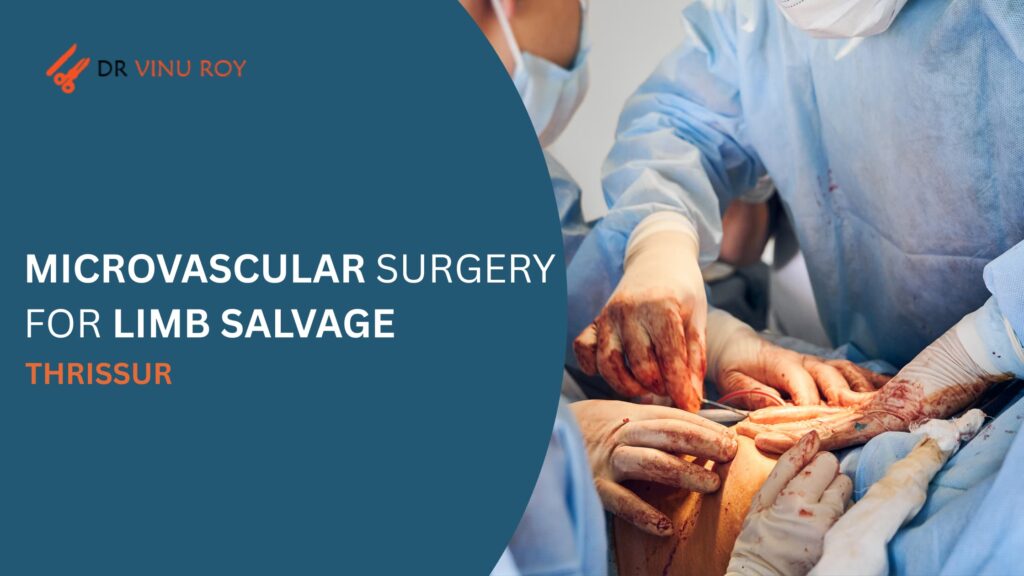
Limb-threatening injuries and conditions can have a profound impact on mobility, independence, and overall quality of life. Traumatic accidents, infections, or congenital anomalies can compromise a limb’s function and appearance, often putting patients at risk of amputation.
Thanks to microvascular surgery, many patients now have the opportunity to save and restore limbs that would otherwise be lost. This highly specialized field of reconstructive surgery allows for the reconnection of blood vessels, nerves, and tissues, providing both functional and aesthetic restoration.
Dr. Vinu Roy, a highly skilled plastic and reconstructive surgeon based in Thrissur, Kerala, specializes in complex microvascular procedures aimed at preserving limb function, improving appearance, and enhancing overall patient outcomes.
What Is Microvascular Surgery?
Microvascular surgery involves the use of high-powered microscopes and precision instruments to reconnect tiny blood vessels and nerves, often less than 2 millimeters in diameter. This meticulous surgical technique is essential in situations where blood supply to the limb is compromised or where large tissue defects need reconstruction.
Through microvascular surgery, surgeons can:
Restore blood flow to traumatized or ischemic tissue.
Reattach avulsed or severed limbs.
Repair damaged nerves to regain sensation and motor function.
Perform tissue transplantation (skin, muscle, bone) to cover defects.
The precision and versatility of this surgery make it the gold standard in limb salvage procedures.
When Is Limb Salvage Surgery Needed?
Microvascular surgery for limb salvage is indicated in a variety of clinical situations:
Traumatic Injuries:
Road traffic accidents, industrial or agricultural injuries, crush injuries, and avulsions often result in severe tissue loss that threatens limb viability. Early microsurgical intervention can prevent amputation.Chronic Infections:
Conditions like diabetic foot ulcers, osteomyelitis, or gangrene can destroy soft tissue and bone. Limb salvage with microvascular reconstruction allows restoration of function and prevents progressive tissue loss.Tumor Resection:
Following excision of malignant or benign tumors, tissue defects may require reconstruction to preserve limb form and function. Microvascular techniques provide durable and functional coverage.Congenital Deformities:
Complex congenital anomalies affecting the limbs can be corrected using microsurgical reconstruction to improve mobility, appearance, and overall quality of life.
Early intervention is critical, as delays can lead to tissue necrosis, infections, and reduced chances of successful limb salvage.
Surgical Techniques for Limb Salvage
Dr. Vinu Roy employs state-of-the-art microsurgical techniques tailored to each patient’s needs:
| Surgical Technique | Description | Benefits | Recovery Time | Considerations |
|---|---|---|---|---|
| Free Tissue Transfer | Transplanting skin, muscle, or bone from another part of the body to cover limb defects | Durable coverage, restores contour and function | 4–8 weeks | Requires careful monitoring for blood supply |
| Vascular Anastomosis | Reconnection of arteries and veins to restore circulation | Ensures tissue survival, prevents limb loss | 2–6 weeks | Technically demanding, requires microsurgery |
| Nerve Grafting | Repair or replacement of damaged nerves | Restores sensation and motor function | 6–12 weeks | Rehabilitation required for optimal recovery |
| Composite Reconstruction | Combines tissue, bone, and nerve repair in complex injuries | Restores both form and function | 8–16 weeks | May require staged procedures |
| Fasciocutaneous Flaps | Flaps with skin and fascia to cover defects | Flexible coverage, preserves limb contour | 3–6 weeks | Donor site morbidity should be considered |
Benefits of Microvascular Limb Salvage Surgery
Preservation of Limb Function: Patients maintain mobility, independence, and daily functionality.
Aesthetic Restoration: Precise reconstruction restores natural appearance, minimizing visible deformity.
Psychological Benefit: Avoiding amputation significantly reduces emotional trauma and enhances self-confidence.
Versatility: Applicable for trauma, chronic infections, tumor reconstruction, and congenital limb defects.
Long-Term Durability: Advanced microsurgical techniques provide robust tissue coverage that withstands daily use.
Post-Operative Care and Rehabilitation
The success of microvascular limb salvage depends not only on surgery but also on comprehensive post-operative care:
Wound Monitoring: Ensuring flap and graft survival with regular checks and dressings.
Pain and Infection Management: Proper medication and hygiene reduce complications.
Physical Therapy: Gradual mobilization helps restore strength, range of motion, and fine motor skills.
Scar and Tissue Management: Massage, silicone sheets, and laser therapy improve aesthetic outcomes.
Long-Term Follow-Up: Continuous assessment ensures functionality, detects complications early, and evaluates the need for refinement procedures.
Patient Journey with Dr. Vinu Roy
Initial Assessment: Detailed evaluation using imaging, vascular studies, and functional testing.
Customized Surgical Planning: Personalized strategy based on the injury’s severity, location, and patient health.
Microsurgery Procedure: Execution of tissue transfer, nerve repair, and vascular reconnections.
Recovery and Rehabilitation: Intensive care to maximize graft survival and functional restoration.
Long-Term Monitoring: Follow-ups to assess recovery, refine aesthetics, and restore full function.
Frequently Asked Questions (FAQs)
Who is eligible for microvascular limb salvage surgery?
Patients with severe trauma, chronic infections, tumor resections, or congenital deformities threatening limb viability are evaluated individually.
How long does the surgery take?
Depending on the complexity, procedures can last from 4 to 12 hours.
Is microvascular surgery painful?
Surgery is performed under anesthesia. Post-operative pain is managed with medications.
How soon can I start using the limb?
Light movement begins within a few weeks under physiotherapy guidance, with full functional recovery taking several months.
What are the risks?
Possible risks include infection, flap failure, blood clots, or nerve injury. Skilled surgical techniques and careful post-operative care minimize these risks.
Can limb salvage completely prevent amputation?
In most cases, timely microvascular surgery significantly reduces the need for amputation and restores both function and appearance.
Conclusion
Microvascular surgery for limb salvage is a transformative procedure that restores function, appearance, and confidence in patients with severe limb injuries or defects.
With the expertise of Dr. Vinu Roy, patients can achieve functional recovery and aesthetic restoration, avoiding amputation and regaining mobility and independence.
Early consultation and intervention are critical to maximize limb survival, minimize complications, and improve long-term outcomes.

