
9 Helpful Facts: Is Breast Augmentation Surgery Safe? Guide
Many women who think about breast enhancement ask one important question first: Is Breast Augmentation Surgery Safe? This is a very natural concern because breast augmentation is a surgical procedure that involves implants, anesthesia, recovery time, and long-term care. In Kerala, patients often look for clear, simple, and honest information before deciding whether this procedure is right for them.
The answer to Is Breast Augmentation Surgery Safe? depends on many factors, including the patient’s health, implant choice, surgical planning, surgeon experience, hospital safety standards, and proper follow-up care. Breast augmentation can be performed safely for suitable candidates when it is planned carefully and done by a qualified plastic surgeon.
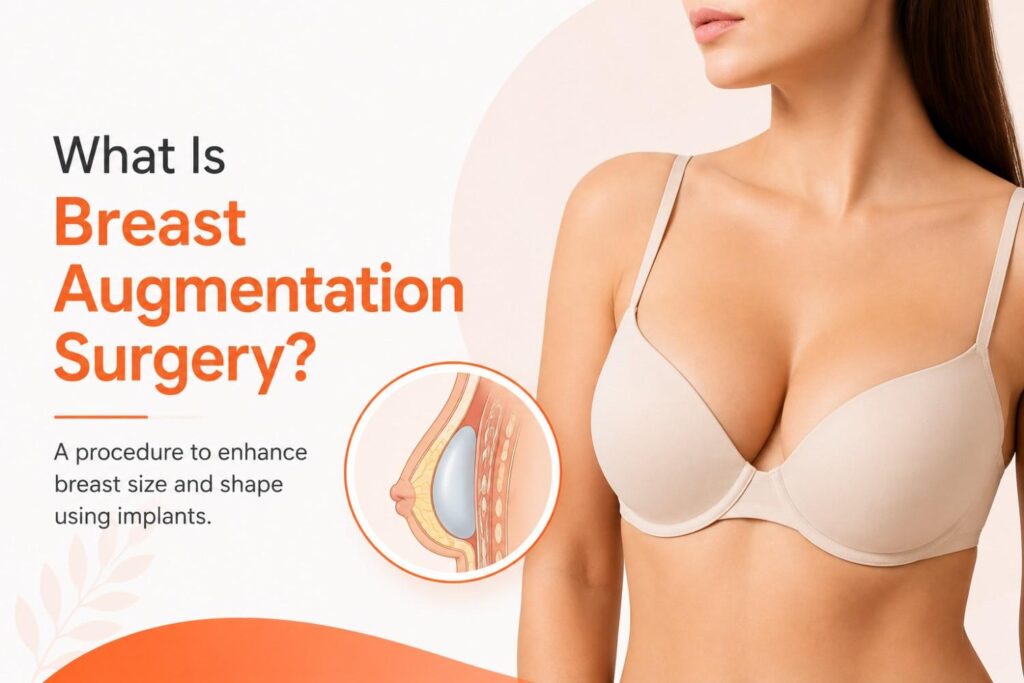
What Is Breast Augmentation Surgery?
Breast augmentation surgery is a cosmetic procedure performed to increase breast volume, improve breast shape, correct asymmetry, or restore fullness lost after pregnancy, weight change, or aging.
The procedure usually involves placing breast implants either under the breast tissue or under the chest muscle. The best placement depends on the patient’s body structure, existing breast tissue, implant type, and desired result.
Breast augmentation is not a one-size-fits-all surgery. Each treatment plan should be personalized after a proper consultation, examination, and discussion of expectations.
Is Breast Augmentation Surgery Safe for Everyone?
Is Breast Augmentation Surgery Safe? The simple answer is that it may be safe for many healthy adults, but it is not suitable for everyone.
A patient may be considered suitable if she:
- Is in good general health
- Has realistic expectations
- Understands the benefits and risks
- Does not have an active infection
- Is not pregnant or breastfeeding at the time of surgery
- Is emotionally prepared for the procedure and recovery
- Can follow post-surgery care instructions
A detailed consultation is important because the surgeon needs to understand the patient’s medical history, lifestyle, breast anatomy, skin quality, and cosmetic goals before recommending surgery.
Why Do People Ask: Is Breast Augmentation Surgery Safe?
Patients ask Is Breast Augmentation Surgery Safe? because the procedure involves both short-term and long-term considerations.
Common concerns include:
- Safety of breast implants
- Anesthesia-related risks
- Pain after surgery
- Scarring
- Infection
- Implant rupture
- Capsular contracture
- Changes in nipple or breast sensation
- Need for future implant replacement or revision
- Effect on breast screening and future pregnancy
These concerns are valid. A responsible consultation should explain both the advantages and possible risks clearly.
Types of Breast Implants and Safety
Implant choice plays an important role in breast augmentation safety and results. The two commonly discussed implant types are silicone implants and saline implants.
Silicone Implants
Silicone implants contain cohesive silicone gel. They are commonly chosen because they may feel closer to natural breast tissue.
Possible benefits include:
- Natural feel
- Softer texture
- Wide size options
- Natural-looking contour in suitable patients
Saline Implants
Saline implants are filled with sterile saltwater solution. If leakage occurs, the saline is absorbed by the body, but the implant shape may visibly change.
Possible benefits include:
- Adjustable volume in selected cases
- Smaller incision in some approaches
- Easier detection of deflation
The safest implant option depends on the patient’s body, goals, and surgeon’s recommendation. The question Is Breast Augmentation Surgery Safe? should always include a discussion about implant type, implant size, surface, shape, and long-term monitoring.
Common Risks of Breast Augmentation Surgery
Every surgery has possible risks. Breast augmentation is no exception. A safe decision begins with understanding these risks clearly.
Possible risks include:
- Bleeding
- Infection
- Pain or tightness
- Temporary swelling
- Scarring
- Changes in breast or nipple sensation
- Implant shifting
- Implant rupture or leakage
- Capsular contracture
- Breast asymmetry
- Need for revision surgery
- Anesthesia-related complications
Some patients may heal faster, while others may take more time. Risk levels vary based on health condition, surgical technique, implant choice, and aftercare.
What Is Capsular Contracture?
Capsular contracture is one of the commonly discussed implant-related concerns. After implant placement, the body naturally forms a layer of scar tissue around the implant. In some cases, this capsule may become tight and firm.
This can cause:
- Breast hardness
- Discomfort
- Change in breast shape
- Implant distortion
- Pain in some cases
Not every patient develops capsular contracture. Good surgical planning, sterile technique, proper implant selection, and follow-up care may help reduce risk.
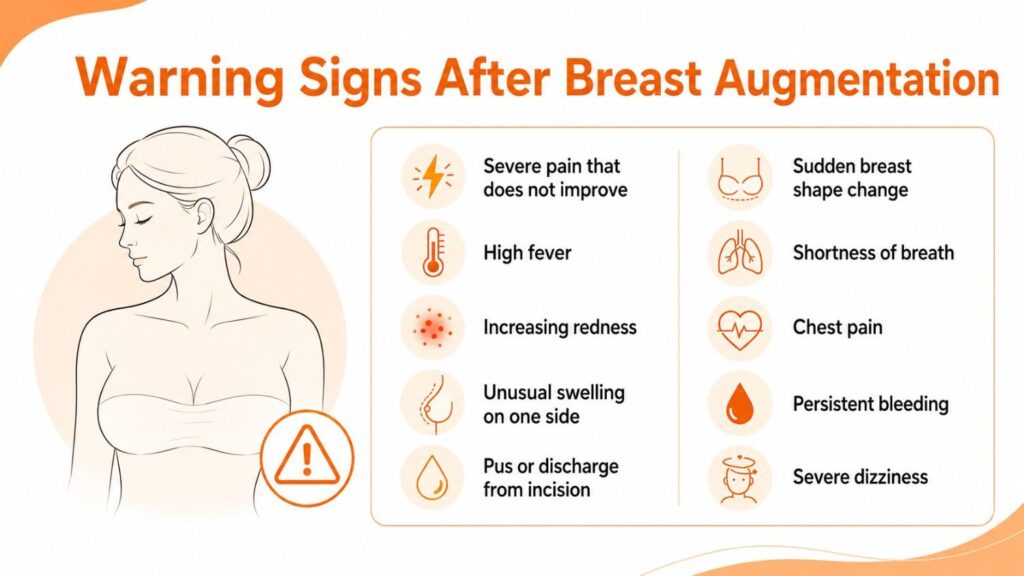
Warning Symptoms After Breast Augmentation
Patients should know which symptoms need medical attention after surgery. Mild swelling, tightness, and discomfort may be expected during early recovery, but certain symptoms should not be ignored.
Contact the doctor if there is:
- Severe pain that does not improve
- High fever
- Increasing redness
- Unusual swelling on one side
- Pus or discharge from incision
- Sudden breast shape change
- Shortness of breath
- Chest pain
- Persistent bleeding
- Severe dizziness
Understanding these warning symptoms is part of answering Is Breast Augmentation Surgery Safe? because early medical attention can help manage complications quickly.
How Surgeon Experience Improves Safety
The safety of breast augmentation depends greatly on the surgeon’s training and planning. A qualified plastic surgeon evaluates the patient carefully before surgery and explains suitable options.
A good safety-focused consultation includes:
- Medical history review
- Breast examination
- Measurement of chest and breast dimensions
- Discussion of implant size
- Review of implant type
- Explanation of incision options
- Discussion of risks and recovery
- Realistic outcome planning
- Postoperative care instructions
Choosing a surgeon only based on low cost or unrealistic promises can increase risk. Safety should always come before size, trend, or quick results.
Tips for Safer Breast Augmentation Recovery
Patients can support safer healing by following simple care steps.
Useful tips include:
- Take prescribed medicines correctly
- Wear the recommended support garment
- Avoid smoking
- Avoid heavy exercise until approved
- Sleep in the advised position
- Keep follow-up appointments
- Do not massage the breasts unless instructed
- Watch for unusual symptoms
- Maintain a stable weight
- Follow wound care instructions carefully
Recovery is not the time to rush. Giving the body enough time to heal is important for safety and long-term results.
Breast Augmentation and Pregnancy
Many women ask whether breast augmentation affects pregnancy or breastfeeding. Pregnancy can naturally change breast size, skin elasticity, and shape, whether implants are present or not.
Changes after pregnancy may include:
- Breast volume change
- Skin stretching
- Sagging
- Shape changes
- Difference in implant appearance
Some women may breastfeed after breast augmentation, but this depends on factors such as incision type, breast anatomy, and individual health. Patients planning pregnancy should discuss this during consultation.
Breast Augmentation and Breast Screening
Breast implants may require special attention during breast screening. Patients should inform the radiology team that they have implants before mammography or other breast imaging.
This helps the imaging team use suitable techniques. Breast health monitoring should continue even after cosmetic surgery.
Benefits of Breast Augmentation Surgery
While safety is important, patients also want to understand the possible benefits.
Potential benefits include:
- Improved breast volume
- Better breast symmetry
- Restored fullness after pregnancy or weight loss
- Improved body proportion
- Better clothing fit
- Enhanced personal confidence
- More balanced breast shape
Results vary from person to person. A safe and satisfying outcome depends on realistic expectations and proper planning.
Questions to Ask Before Surgery
Before deciding, patients should ask the surgeon clear questions.
Important questions include:
- Is Breast Augmentation Surgery Safe for my health condition?
- Which implant type is suitable for me?
- What implant size matches my body?
- Where will the implant be placed?
- Where will the incision be made?
- What are the possible risks?
- How long is the recovery period?
- When can I return to work?
- Will I need future implant replacement?
- What symptoms should I report after surgery?
A good consultation should never feel rushed. Patients should feel comfortable asking doubts.
Conclusion
Is Breast Augmentation Surgery Safe? For many suitable patients, breast augmentation can be performed safely when the procedure is planned carefully, done by a qualified plastic surgeon, and followed by proper recovery care. However, like all surgeries, it has possible risks such as infection, scarring, implant rupture, capsular contracture, sensation changes, and revision surgery.
Patients in Kerala should make decisions based on medical guidance, realistic expectations, and a clear understanding of both benefits and risks. The safest approach is to choose proper consultation, personalized implant planning, careful surgery, and regular follow-up. Is Breast Augmentation Surgery Safe? The best answer depends on the right patient, the right plan, and the right surgical care.
For additional information about breast augmentation procedures and implant safety, visit the American Society of Plastic Surgeons Breast Augmentation Resources.
FREQUENRLY ASKED QUESTIONS

Dr Vinu Roy
Plastic and Cosmetic SurgeonDr Vinu Roy is a plastic and cosmetic surgeon with expertise in cosmetic surgery, reconstructive surgery, microvascular surgery, hand surgery, trauma reconstruction, and brachial plexus procedures.
He focuses on enhancing both form and function with personalized surgical care, helping patients achieve their aesthetic and reconstructive goals with confidence.
Sushrutha Institute of Plastic, Reconstructive, and Aesthetic Surgery, Elite Mission Hospital, Koorkenchery, Thrissur

