
Tendon Injury Treatment in Thrissur
Tendon injuries can affect movement, strength, and everyday activities, particularly when the hand, wrist, fingers, or other important joints are involved. Tendon Injury Treatment in Thrissur focuses on identifying the damaged tendon, understanding the severity of the injury, and selecting an appropriate treatment plan based on the individual case. At a specialist surgical centre, assessment may include clinical examination, imaging, wound evaluation, and functional testing before treatment is recommended.
Whether the injury happened because of a cut, sports activity, fall, crush injury, or repeated strain, early assessment can help determine whether conservative care, rehabilitation, or tendon repair is appropriate.
Table of Contents
- What Is a Tendon Injury?
- What Is Tendon Injury Treatment in Thrissur?
- Common Causes of Tendon Injuries
- Types of Tendon Injuries
- Common Symptoms of a Tendon Injury
- When Should You Seek Medical Assessment?
- How Is a Tendon Injury Diagnosed?
- Tendon Injury Treatment in Thrissur: Treatment Options
- When Is Tendon Repair Surgery Needed?
- What Happens During Tendon Repair?
- Recovery After Tendon Injury Treatment
- Importance of Physiotherapy and Hand Therapy
- Benefits of Timely Tendon Injury Treatment
- Tips for Supporting Tendon Recovery
- Factors That Affect Recovery
- Frequently Asked Questions
- Conclusion
What Is a Tendon Injury?
A tendon is a strong band of connective tissue that joins a muscle to a bone. Tendons transfer the force created by muscles, allowing joints to move. In the hand, for example, flexor tendons help bend the fingers, while extensor tendons help straighten them.
A tendon injury can range from mild irritation or inflammation to a partial tear or complete rupture. A deep cut can also divide a tendon and interfere with normal movement.
The appropriate Tendon Injury Treatment in Thrissur depends on several factors, including the tendon involved, location and extent of damage, age, occupation, general health, and whether nerves, blood vessels, bones, or other tissues are also affected.
A tendon problem should not be assessed only by the amount of pain. Some significant tendon injuries can cause a major loss of movement even when the wound or swelling appears relatively small.
What Is Tendon Injury Treatment in Thrissur?
Tendon Injury Treatment in Thrissur refers to the evaluation and management of damaged tendons, particularly injuries affecting the hand, wrist, fingers, forearm, and other areas where tendon function is important.
Treatment can range from rest and activity modification to structured rehabilitation or surgery. The goal is not simply to reduce discomfort. Treatment aims to protect the injured tendon, support healing, restore movement, and help the person gradually return to daily activities.
For hand and trauma-related injuries, a surgeon may also evaluate associated nerve, vessel, skin, or bone damage. This is important because several structures can be injured at the same time, especially after deep cuts or crush injuries.
Common Causes of Tendon Injuries
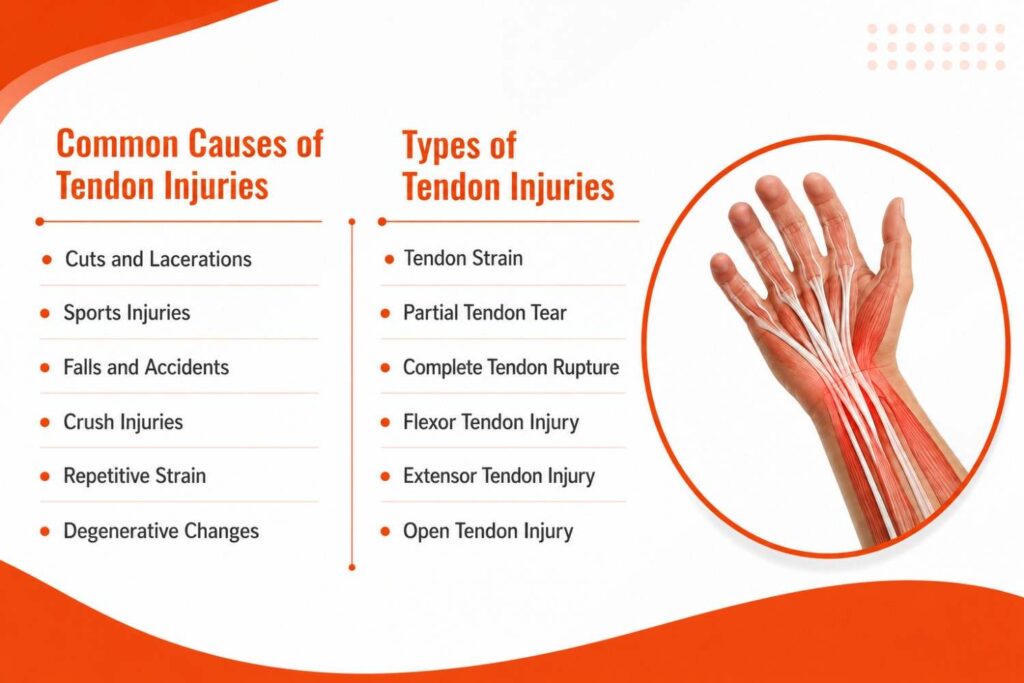
Several situations can damage tendons. Common causes include:
- Cuts and Lacerations
A sharp object can cut through the skin and damage an underlying tendon. Deep wounds involving the fingers, palm, wrist, or forearm require careful assessment.
- Sports Injuries
Sudden force, overextension, or repetitive activity can place considerable stress on a tendon. Sports involving running, jumping, throwing, gripping, or rapid changes of direction may increase the risk of tendon injury.
- Falls and Accidents
A fall can overstretch or tear a tendon. Road traffic accidents and workplace injuries can also cause complex tendon damage.
- Crush Injuries
A heavy object or machinery-related accident can injure tendons along with skin, nerves, blood vessels, and bones. These injuries may require more comprehensive reconstruction.
- Repetitive Strain
Repeated movements can gradually irritate tendons. Activities involving frequent gripping, typing, lifting, or repetitive sports movements may contribute to tendon problems.
- Degenerative Changes
Tendons can become less resilient with age or certain underlying conditions. A tendon affected by degeneration may be more vulnerable to tearing.
Types of Tendon Injuries
Understanding the type of injury helps determine the appropriate Tendon Injury Treatment in Thrissur.
- Tendon Strain
A strain occurs when a tendon is overstretched or irritated. Mild injuries may improve with appropriate activity modification and rehabilitation.
- Partial Tendon Tear
A partial tear means that some tendon fibres remain intact. Treatment depends on the size, location, symptoms, and functional effect of the tear.
- Complete Tendon Rupture
A complete rupture separates the tendon sufficiently to interfere with its normal function. Some complete tears require surgical repair.
- Flexor Tendon Injury
Flexor tendons allow the fingers and thumb to bend. Damage may make it difficult or impossible to flex the affected finger or thumb normally.
- Extensor Tendon Injury
Extensor tendons help straighten the fingers and thumb. Injury can result in difficulty extending the affected digit.
- Open Tendon Injury
An open injury occurs when the tendon is damaged through a wound in the skin. Such injuries need careful assessment because other structures may also be affected.
Common Symptoms of a Tendon Injury
Symptoms vary according to the tendon and severity of damage. Possible signs include:
- Pain at the site of injury
- Swelling or tenderness
- Reduced strength
- Difficulty bending or straightening a joint
- Loss of normal finger or thumb movement
- A gap or abnormal appearance in some complete tears
- Difficulty gripping objects
- Reduced range of motion
- Pain during specific movements
- Weakness during activities that previously felt normal
A sudden loss of movement after an injury deserves prompt medical assessment. After hand tendon repair, new movement loss, increasing redness, swelling, drainage, or fever can require urgent review.
When Should You Seek Medical Assessment?
Prompt assessment is particularly important when a deep cut is followed by an inability to bend or straighten a finger, thumb, wrist, or other joint.You should also consider medical assessment when:
- Movement suddenly becomes restricted after an injury.
- There is significant swelling or bruising.
- The injury involves a deep wound.
- You notice weakness after a sudden force.
- Symptoms continue despite rest.
- The affected area becomes increasingly painful.
- You have difficulty performing normal work or household activities.
Early evaluation does not automatically mean surgery. It helps establish what has actually happened and whether non-surgical care or tendon repair is more appropriate.
How Is a Tendon Injury Diagnosed?
An important part of Tendon Injury Treatment in Thrissur is an accurate diagnosis.
Clinical Examination
A doctor may assess:
- Active movement
- Passive movement
- Muscle and tendon function
- Grip strength
- Sensation
- Circulation
- Wound location
- Joint stability
The difference between active and passive movement can provide useful information about tendon function.
Imaging Tests
Depending on the injury, imaging may be considered. Ultrasound or MRI can sometimes help assess soft-tissue damage, while X-rays may be useful when a fracture or foreign body is suspected.The choice of investigation depends on the clinical findings and suspected injury.
Tendon Injury Treatment in Thrissur: Treatment Options
There is no single treatment that is appropriate for every tendon injury. Tendon Injury Treatment in Thrissur should be selected according to the nature and severity of the damage.
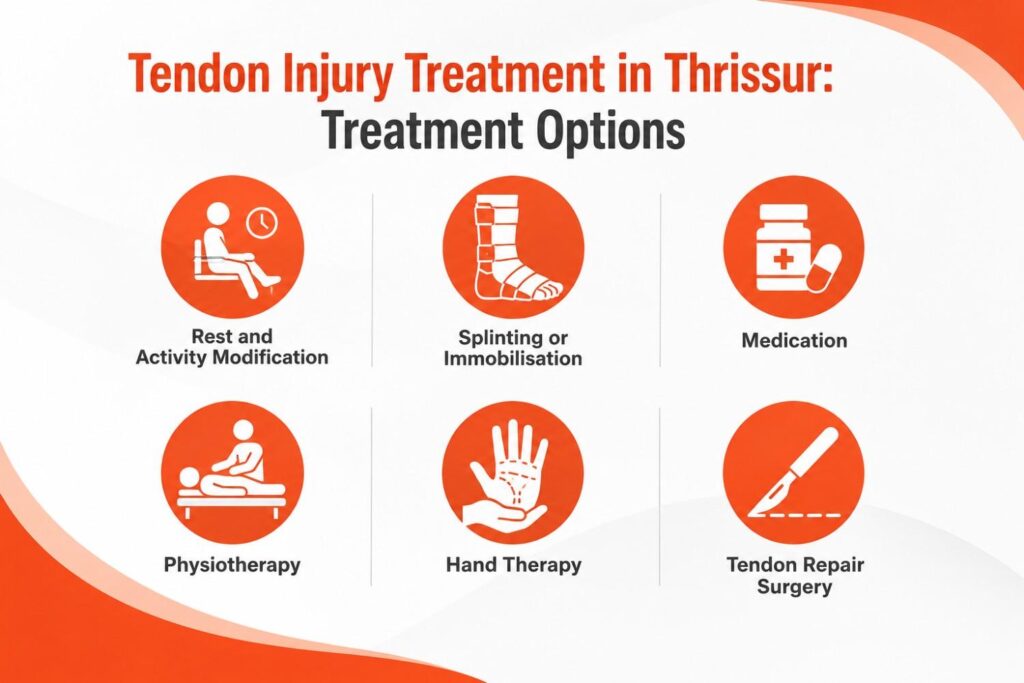
Rest and Activity Modification
For selected mild tendon injuries, temporarily reducing activities that aggravate symptoms can help protect the tendon.
Splinting or Immobilisation
A splint may be recommended to restrict certain movements and protect an injured tendon. Following surgery, splints can also help protect the repair during the early healing period.
Medication
Depending on the individual situation, a doctor may recommend medication for pain or inflammation. Medication should be taken according to professional advice.
Physiotherapy
Rehabilitation can help restore flexibility, strength, coordination, and controlled movement.
Hand Therapy
For hand tendon injuries, specialist hand therapy is particularly important. A therapist can provide an exercise programme designed around the location and type of repair.
When Is Tendon Repair Surgery Needed?
Surgery may be considered when a tendon has been completely cut or ruptured and normal function cannot be restored adequately through conservative care.Hand tendon repair involves bringing the damaged tendon ends together and securing them so healing can occur. The NHS notes that surgery may be needed when hand tendons are damaged by injuries such as deep cuts or when other treatments have not restored function.
The timing and method of Tendon Injury Treatment in Thrissur depend on factors such as:
- Type of tendon involved
- Location of the injury
- Complete or partial damage
- Condition of the wound
- Presence of infection
- Associated nerve or vessel injuries
- Time since the injury
- Overall health of the patient
What Happens During Tendon Repair?
The exact procedure varies according to the tendon and injury.During hand tendon repair, the surgeon generally accesses the damaged area, identifies the tendon ends, and joins them using specialised sutures. The wound is then closed and the hand is protected with an appropriate dressing or splint.Following repair, the tendon remains vulnerable while healing. This is why protection and rehabilitation are essential parts of Tendon Injury Treatment in Thrissur.If nerves, blood vessels, bones, or other tissues have also been damaged, additional procedures may be required.
Recovery After Tendon Injury Treatment
Recovery from Tendon Injury Treatment in Thrissur is a gradual process. The skin may appear healed before the tendon has regained adequate strength.Following hand tendon repair, splinting and structured therapy are commonly used. Some tendon repairs may take several weeks to heal, and full strengthening can take longer.Patients should follow their surgeon’s and therapist’s instructions carefully rather than increasing activity based only on how comfortable the hand feels.
Early Recovery
The initial period generally focuses on:
- Protecting the repair
- Managing swelling
- Caring for the wound
- Using the prescribed splint
- Starting carefully controlled exercises when advised
Rehabilitation Phase
As healing progresses, therapy may gradually address:
- Range of motion
- Tendon gliding
- Strength
- Grip function
- Coordination
- Scar management
- Functional activities
The exact programme should be individualised. Incorrect or excessive exercise can damage a healing tendon, while inadequate movement may contribute to stiffness and adhesions.
Benefits of Timely Tendon Injury Treatment
Appropriate Tendon Injury Treatment in Thrissur can provide several potential benefits when the injury is assessed and managed correctly.
- Better Understanding of the Injury
Professional assessment can identify the structures involved and establish whether further investigation is necessary.
- Protection of Tendon Function
Early treatment can help protect the injured tendon from additional stress.
- Improved Movement
When appropriate treatment is combined with rehabilitation, the goal is to restore useful movement and function.
- Support for Daily Activities
Good rehabilitation may help patients gradually return to work, household activities, hobbies, and other routine tasks.
- Reduced Risk of Avoidable Problems
Following post-treatment instructions can help reduce the risk of complications such as stiffness, adhesions, infection, or repair failure.
Conclusion
Tendon injuries can affect movement, strength, and independence, but the appropriate treatment can vary considerably from one person to another. Tendon Injury Treatment in Thrissur may involve conservative care, splinting, physiotherapy, hand therapy, or tendon repair surgery depending on the type and severity of damage.
Early assessment is especially important after deep cuts, crush injuries, sudden loss of movement, or suspected tendon rupture. A personalised treatment and rehabilitation plan can help protect the tendon while supporting gradual recovery. For patients seeking specialist evaluation, Tendon Injury Treatment in Thrissur can be discussed with a qualified surgeon experienced in hand and trauma-related care. For additional information about breast augmentation procedures and implant safety, visit the American Society of Plastic Surgeons Breast Augmentation Resources.
Table Of Contents
Tendon Injury Symptom
Causes of Tendon Injuries
Types of Tendon Injuries

Dr Vinu Roy
Plastic and Cosmetic SurgeonDr Vinu Roy is a plastic and cosmetic surgeon with expertise in cosmetic surgery, reconstructive surgery, microvascular surgery, hand surgery, trauma reconstruction, and brachial plexus procedures.
He focuses on enhancing both form and function with personalized surgical care, helping patients achieve their aesthetic and reconstructive goals with confidence.
Sushrutha Institute of Plastic, Reconstructive, and Aesthetic Surgery, Elite Mission Hospital, Koorkenchery, Thrissur

