
Recovery After Breast Augmentation Surgery: What to Expect During Healing

Recovering from cosmetic surgery is an important part of achieving the desired outcome. Understanding Recovery After Breast Augmentation Surgery helps patients prepare for the healing process, follow postoperative instructions, and develop realistic expectations about when they can resume daily activities.
Every individual heals differently depending on their overall health, surgical technique, implant placement, and adherence to postoperative care. Knowing what to expect during each stage of recovery can help ensure a smoother healing experience and support long-lasting results.
What Is Recovery After Breast Augmentation Surgery?
Recovery after breast augmentation surgery refers to the healing period that begins immediately after the procedure and continues over several weeks and months.
During recovery, the body gradually adapts to the implants while surgical tissues heal naturally.
The recovery process generally includes:
- Initial healing
- Swelling reduction
- Tissue adaptation
- Scar maturation
- Gradual return to normal activities
- Long-term settling of breast shape
Learning about Recovery After Breast Augmentation Surgery allows patients to better prepare for each phase of healing.
What Happens Immediately After Surgery?
The first few hours after surgery are usually spent under medical observation before patients return home.
During this period, patients may experience:
- Mild soreness
- Temporary swelling
- Tightness across the chest
- Mild bruising
- Temporary fatigue
- Sensitivity around the breasts
These symptoms are a normal part of the body’s healing response and gradually improve over time.
The Different Stages of Recovery
Healing occurs gradually and follows different phases. If you’re considering the procedure, learn more about Breast Augmentation Surgery in Thrissur and what to expect before surgery.
First Week
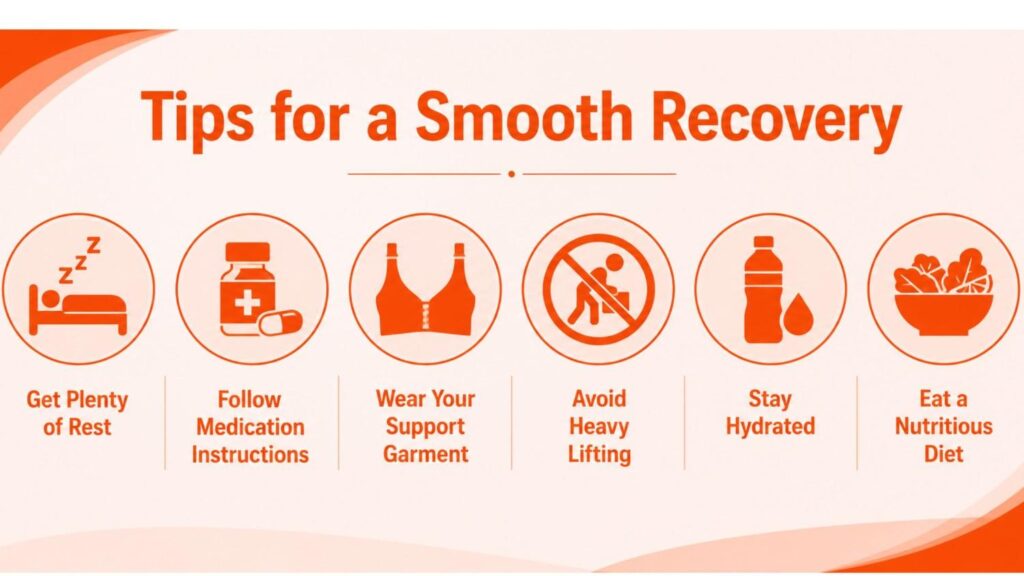
The first week focuses on rest and protecting the surgical area.
Patients are generally advised to:
- Limit physical activity
- Wear the recommended surgical support garment
- Follow medication instructions
- Sleep in the recommended position
- Attend scheduled follow-up appointments
Weeks Two to Four
During the following weeks:
- Swelling gradually decreases.
- Bruising continues to improve.
- Daily activities become easier.
- Energy levels slowly return.
Many patients begin feeling significantly more comfortable during this stage.
One to Three Months
As healing continues:
- Breast implants gradually settle.
- Breast shape becomes more natural.
- Surgical tissues continue adapting.
- Most swelling resolves.
Long-Term Recovery
Complete healing may continue for several months.
During this stage:
- Final breast contour develops.
- Incision scars continue to mature.
- Results become more refined over time.
Common Symptoms During Recovery
Every patient’s healing experience is unique.
Some common postoperative symptoms include:
- Mild swelling
- Bruising
- Tightness
- Temporary numbness
- Mild discomfort
- Increased sensitivity
Most of these symptoms gradually improve as recovery progresses.
When Can Normal Activities Resume?
Recovery timelines vary between individuals.
Your surgeon may advise when it is appropriate to return to:
- Office work
- Driving
- Light exercise
- Household activities
- Gym workouts
- Swimming
- High-impact sports
Activity should always be resumed gradually and only after medical guidance.
Caring for Surgical Incisions
Proper incision care helps support healing.
Patients may receive instructions regarding:
- Keeping incisions clean
- Dressing changes
- Showering
- Scar management
- Follow-up examinations
Following these recommendations helps reduce the likelihood of complications.
When Should You Contact Your Surgeon?
Although most recoveries progress normally, patients should seek medical advice if they notice:
- Persistent fever
- Increasing redness
- Significant swelling on one side
- Unusual drainage
- Severe pain that worsens
- Sudden changes in breast appearance
Early medical evaluation helps address concerns promptly.
Factors That Influence Recovery
Several factors can affect Recovery After Breast Augmentation Surgery.
These include:
- Individual healing capacity
- Overall health
- Age
- Implant placement
- Surgical technique
- Smoking habits
- Following postoperative instructions
Each recovery journey is unique, and healing timelines may vary.
Supporting Long-Term Results
Maintaining long-term results involves healthy lifestyle habits.
Patients are encouraged to:
- Maintain a stable body weight
- Wear supportive bras when appropriate
- Attend follow-up appointments
- Monitor overall breast health
- Follow their surgeon’s recommendations
These measures help support long-lasting surgical outcomes.
Conclusion
Understanding Recovery After Breast Augmentation Surgery helps patients prepare for every stage of healing, from the immediate postoperative period to long-term recovery. While healing timelines differ from person to person, following postoperative instructions, attending scheduled follow-up appointments, and maintaining healthy lifestyle habits all contribute to optimal recovery. With personalized care and realistic expectations, patients can support a smoother healing journey and enjoy long-lasting breast augmentation results.
For additional information about breast augmentation recovery, postoperative care, and healing timelines, refer to the American Society of Plastic Surgeons’ Breast Augmentation guide.
Frequently Asked Questions
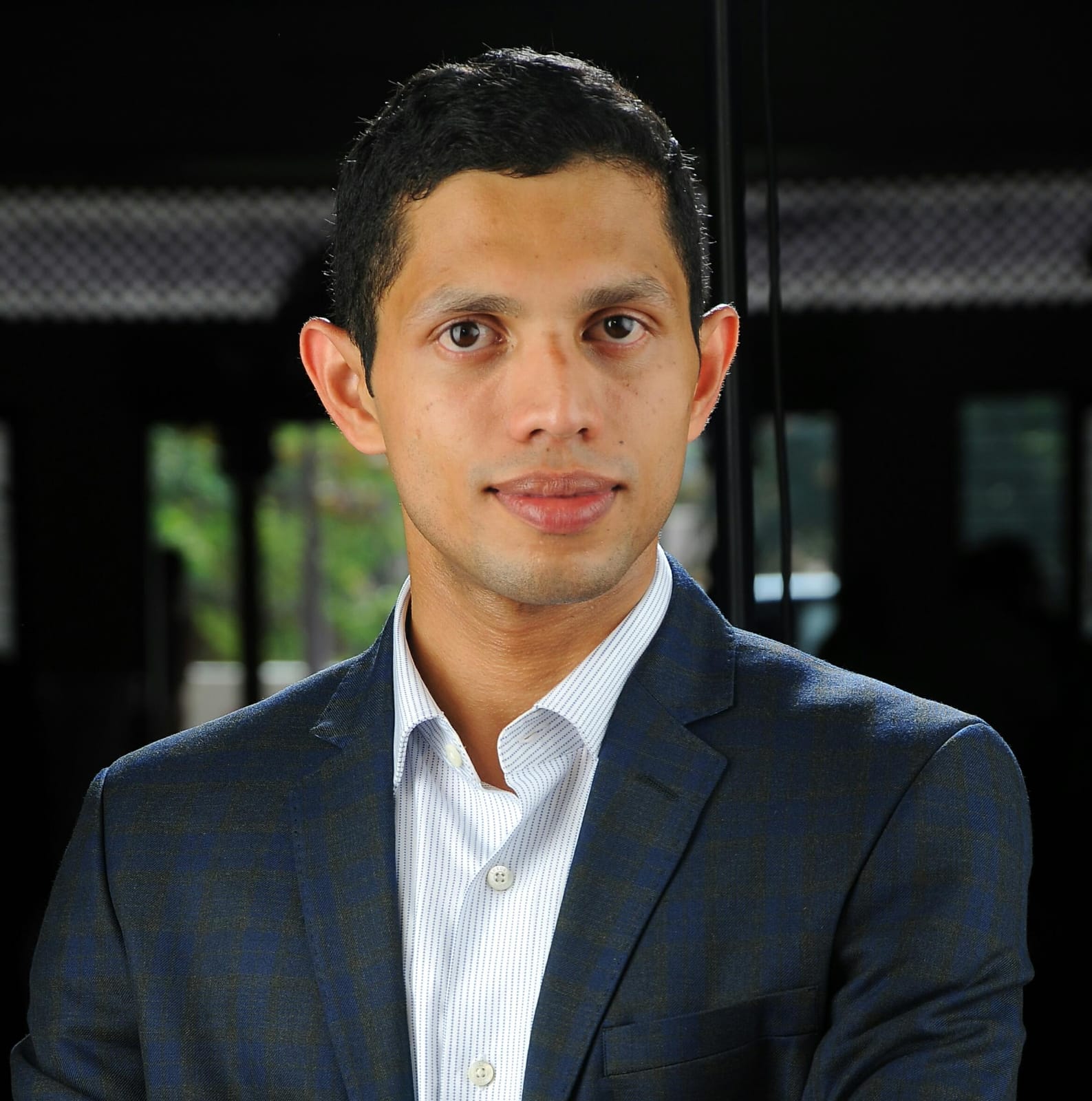
Dr Vinu Roy
Plastic and Cosmetic SurgeonDr Vinu Roy is a plastic and cosmetic surgeon with expertise in cosmetic surgery, reconstructive surgery, microvascular surgery, hand surgery, trauma reconstruction, and brachial plexus procedures.
He focuses on enhancing both form and function with personalized surgical care, helping patients achieve their aesthetic and reconstructive goals with confidence.
Sushrutha Institute of Plastic, Reconstructive, and Aesthetic Surgery, Elite Mission Hospital, Koorkenchery, Thrissur

