
A Complete Guide to Breast Implant Types

Breast augmentation is one of the most commonly performed cosmetic procedures worldwide, offering individuals the opportunity to enhance breast volume, improve symmetry, and achieve more balanced body proportions. One of the most important aspects of the procedure is understanding the available implant options. This guide on Breast Implant Types Explained helps patients learn about the different implant materials, shapes, sizes, and placement options that may be considered during treatment planning.
When exploring breast augmentation, understanding Breast Implant Types Explained can help individuals make informed decisions that align with their aesthetic goals, body structure, and lifestyle preferences.
Why Understanding Breast Implant Types Matters
Every patient has unique goals and anatomical considerations. Understanding Breast Implant Types Explained allows individuals to better participate in treatment planning discussions and select options that support their desired outcomes.
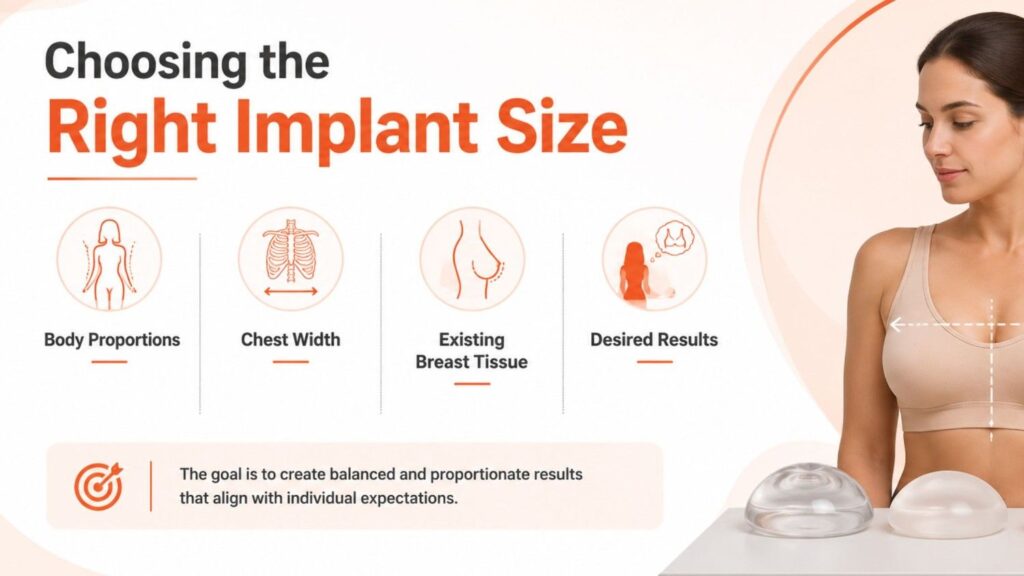
Factors that influence implant selection include:
- Existing breast tissue
- Body proportions
- Chest width
- Skin elasticity
- Desired breast volume
- Lifestyle considerations
- Long-term expectations
A personalized consultation helps determine the most suitable implant type for each individual.
Breast Implant Types Explained: Main Implant Materials
When discussing Breast Implant Types Explained, implant material is often the first consideration.
Silicone Breast Implants
Silicone implants contain a cohesive silicone gel that is designed to closely resemble the feel of natural breast tissue.
Potential benefits include:
- Natural feel
- Realistic appearance
- Wide range of sizes
- Popular choice among patients
Many individuals exploring breast augmentation choose silicone implants because of their soft texture and natural contour.
Saline Breast Implants
Saline implants are filled with sterile saltwater solution.
Potential advantages include:
- Adjustable filling volume
- Consistent implant shape
- Smaller insertion requirements in some cases
Both silicone and saline implants have unique characteristics, making consultation and personalized planning important.
Breast Implant Shapes Explained
Another important part of Breast Implant Types Explained is understanding implant shape options.
Round Implants
Round implants are among the most commonly selected options.
They may provide:
- Increased upper breast fullness
- Enhanced projection
- Symmetrical appearance
- Fuller contour
Round implants are often selected by individuals seeking a more noticeable enhancement.
Anatomical (Teardrop) Implants
Anatomical implants are designed to mimic the natural slope of the breast.
Potential characteristics include:
- Gradual contour
- Natural profile
- Subtle enhancement
The most appropriate shape depends on body structure and aesthetic goals.
Understanding Implant Profiles
Implant profile refers to how far the implant projects from the chest wall.
Low Profile Implants
Low-profile implants generally offer:
- Wider base
- Moderate projection
- Natural appearance
Moderate Profile Implants
These implants balance width and projection.
Potential benefits include:
- Balanced contour
- Versatile appearance
- Suitable for many body types
High Profile Implants
High-profile implants provide:
- Greater projection
- Narrower base
- Enhanced fullness
Profile selection is customized according to chest dimensions and desired outcomes.
Implant Placement Options
Understanding implant placement is another important part of Breast Implant Types Explained.
Submuscular Placement
The implant is positioned beneath the chest muscle.
Potential advantages include:
- Additional implant coverage
- Natural contour
- Smooth transition
Subglandular Placement
The implant is placed above the chest muscle and below breast tissue.
Potential benefits include:
- Different contour characteristics
- Suitable option in selected cases
The most appropriate placement depends on individual anatomy and surgical planning.
Factors Considered During Implant Selection
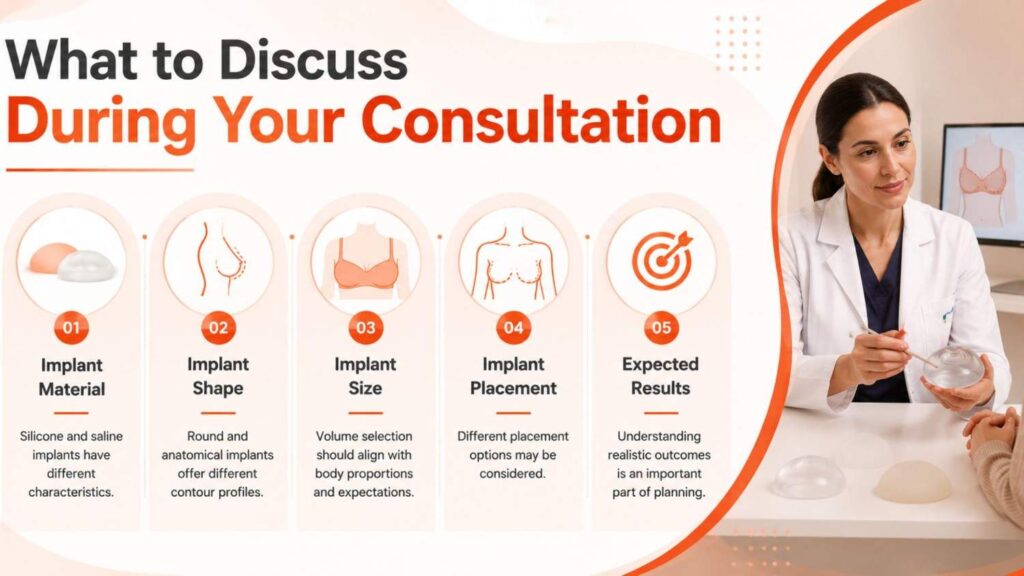
A thorough consultation helps determine the best implant option.
Medical History
Previous surgeries and health conditions are reviewed.
Physical Examination
Breast tissue, skin quality, and chest anatomy are evaluated.
Aesthetic Goals
Desired shape, size, and projection are discussed.
Lifestyle Considerations
Physical activity levels and personal preferences may influence treatment recommendations.
Benefits of Choosing the Right Implant Type
Understanding Breast Implant Types Explained can help patients appreciate how implant selection affects outcomes.
Improved Breast Volume
Implants can enhance fullness and projection.
Better Symmetry
Differences in breast size or shape may be addressed.
Balanced Body Proportions
Breast augmentation can help create more harmonious body contours.
Personalized Results
Implant selection is customized to individual goals.
Long-Term Satisfaction
Careful planning may contribute to improved satisfaction with outcomes.
Why Professional Guidance Matters
Breast implant selection involves more than simply choosing a size. Understanding Breast Implant Types Explained requires careful evaluation of anatomy, lifestyle, and aesthetic goals.
An experienced plastic surgeon can help:
- Evaluate implant suitability
- Discuss available options
- Explain benefits and considerations
- Create a personalized treatment plan
- Support informed decision-making
Every breast augmentation procedure should be tailored to the individual rather than following a one-size-fits-all approach.
Individuals considering breast augmentation can benefit from learning more about the complete procedure, implant selection process, recovery expectations, and long-term results. For a broader understanding of treatment planning and surgical options, explore our complete guide to breast augmentation surgery.
Conclusion
Understanding Breast Implant Types Explained is an important step for anyone considering breast augmentation. Implant material, shape, profile, size, and placement all contribute to the final outcome and should be carefully evaluated during consultation. Modern breast augmentation offers highly personalized options that allow treatment plans to be tailored according to individual goals and body proportions. By learning about Breast Implant Types Explained, patients can participate more confidently in the decision-making process and work toward achieving balanced, natural-looking, and satisfying results.
Individuals seeking additional information about implant materials, implant safety, and augmentation procedures can explore breast implant information and augmentation options from trusted plastic surgery resources.
Frequently Asked Questions
1. What are the main types of breast implants?
2. Which breast implant type looks more natural?
3. What is the difference between round and anatomical implants?
4. How is the right implant size selected?
5. Are larger breast implants always better?
6. What factors influence implant placement?
7. How long do breast implants typically last?
8. Can breast implants improve breast asymmetry?
9. Will breast implant results look natural?
10. Why is a consultation important before choosing breast implants?

Dr Vinu Roy
Plastic and Cosmetic SurgeonDr Vinu Roy is a plastic and cosmetic surgeon with expertise in cosmetic surgery, reconstructive surgery, microvascular surgery, hand surgery, trauma reconstruction, and brachial plexus procedures.
He focuses on enhancing both form and function with personalized surgical care, helping patients achieve their aesthetic and reconstructive goals with confidence.
Sushrutha Institute of Plastic, Reconstructive, and Aesthetic Surgery, Elite Mission Hospital, Koorkenchery, Thrissur

