
In recent years, Kerala has become a leading destination for advanced surgical procedures, particularly in the field of nerve and reconstructive surgery. Among these, adult brachial plexus reconstruction Kerala has gained prominence because of the specialized expertise available, the integration of modern surgical techniques, and the compassionate care offered to patients.
This blog aims to provide patients and families with in-depth knowledge about adult brachial plexus injuries, their treatment, and how centers such as Sushrutha Institute of Plastic, Reconstructive, and Aesthetic Surgery, Elite Mission Hospital, Koorkenchery, Thrissur are leading the way in restoring hope and function.
What is the Brachial Plexus?
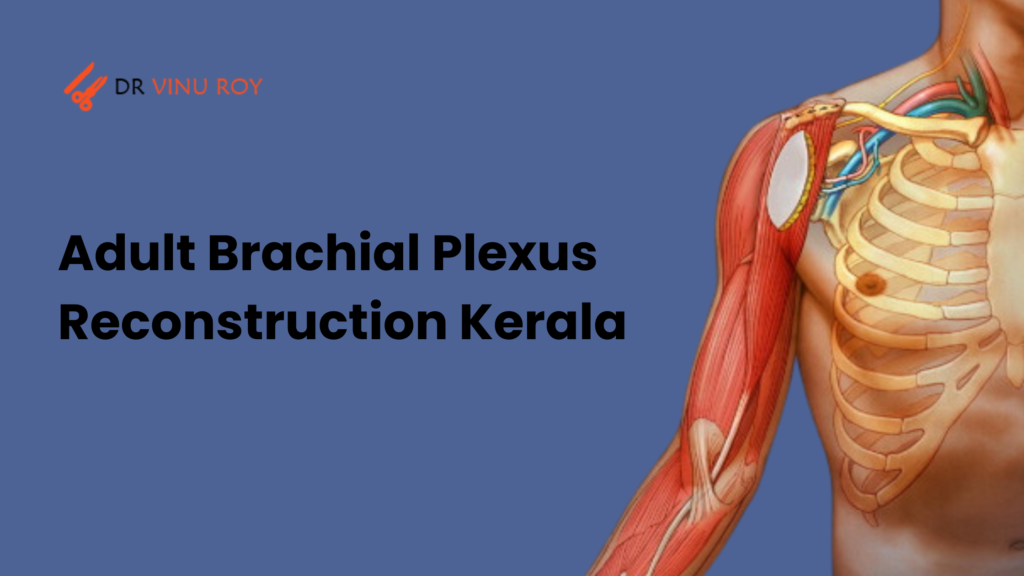
The brachial plexus is a complex network of nerves originating from the spinal cord in the neck and extending through the shoulder into the arm and hand. These nerves control both sensation and movement in the upper limb. Damage to this plexus can severely impair a person’s ability to move their shoulder, elbow, wrist, or fingers, often leading to disability if untreated.
Adult Brachial Plexus Injuries: Causes and Impact
While brachial plexus injuries can affect infants during birth, adults often suffer them due to high-impact trauma such as:
Road traffic accidents (especially motorbike crashes)
Falls from height
Industrial accidents
Sports injuries
Penetrating trauma
For adults, the consequences of these injuries are profound. Loss of arm function affects employment, independence, mental health, and overall quality of life. Patients often describe the injury as “losing their dominant hand overnight,” which makes timely treatment crucial.
Why Adult Brachial Plexus Reconstruction Matters
Without surgical reconstruction, patients with severe nerve injuries may face lifelong disability. Conservative measures like physiotherapy alone often cannot restore function. That is why adult brachial plexus reconstruction Kerala has emerged as a vital service — offering surgical options such as nerve repair, nerve grafting, nerve transfers, and muscle transfers to restore useful function.
Evolution of Surgical Techniques
Over the past two decades, nerve surgery has advanced tremendously. Today, reconstructive surgeons use techniques including:
Direct Nerve Repair – Joining two ends of a cut nerve.
Nerve Grafting – Using nerves from other parts of the body to bridge a gap.
Nerve Transfers – Redirecting less essential nerves to restore vital muscle functions.
Functional Muscle Transfers – Transferring healthy muscles with their blood and nerve supply to replace lost function.
These methods, tailored to each patient, form the foundation of adult brachial plexus reconstruction Kerala, giving hope to patients who previously had no options.
Expertise in Kerala: Why Patients Choose Here
Kerala, known for its medical excellence and patient-centered care, has developed specialized centers for nerve surgery. At Sushrutha Institute of Plastic, Reconstructive, and Aesthetic Surgery, Elite Mission Hospital, Koorkenchery, Thrissur, patients benefit from:
Experienced surgeons with global training in microsurgery
State-of-the-art operating microscopes and instruments
Multidisciplinary rehabilitation support
Affordable yet world-class care
Personalized treatment planning
These factors make adult brachial plexus reconstruction Kerala a preferred choice for patients from across India and abroad.
The Surgical Journey: Step-by-Step
1. Diagnosis
Accurate diagnosis begins with a detailed clinical evaluation, supported by imaging (MRI, CT myelography) and electrodiagnostic tests (EMG, nerve conduction studies).
2. Timing of Surgery
Early surgery — usually within 3 to 6 months of injury — offers the best results. Delays can limit recovery, though late reconstruction may still restore partial function.
3. Surgery
During surgery, damaged nerves are identified and repaired, grafted, or bypassed with transfers. Operating times can range from 4 to 12 hours depending on complexity.
4. Recovery and Rehabilitation
Postoperative care involves physiotherapy, occupational therapy, and sometimes additional procedures. Patients must commit to months of therapy to maximize functional return.
Frequently Asked Questions (FAQ)
1. What is adult brachial plexus reconstruction?
Adult brachial plexus reconstruction is a specialized surgery performed to restore movement and sensation in the arm after injury to the brachial plexus nerves. It may involve nerve grafts, transfers, or muscle transfers depending on the type and severity of injury.
2. Who typically needs this surgery?
Most patients are young adults who suffer nerve damage in road traffic accidents, particularly motorbike accidents. Others may have injuries due to falls, industrial accidents, or penetrating trauma.
3. How soon should I consult a doctor after injury?
You should consult a specialist immediately. Ideally, surgical reconstruction should be considered within 3–6 months of injury. Delays can reduce the chances of functional recovery.
4. Is full recovery possible?
Not always. While complete recovery may not be possible in severe cases, many patients regain significant function such as bending the elbow, lifting the arm, or improving hand movement. The results depend on injury severity, timing, and rehabilitation commitment.
5. What types of surgeries are done for brachial plexus injuries?
Common procedures include direct nerve repair, nerve grafting, nerve transfers, and functional muscle transfers. The surgeon tailors the approach to each patient’s condition.
6. How long is the hospital stay after surgery?

